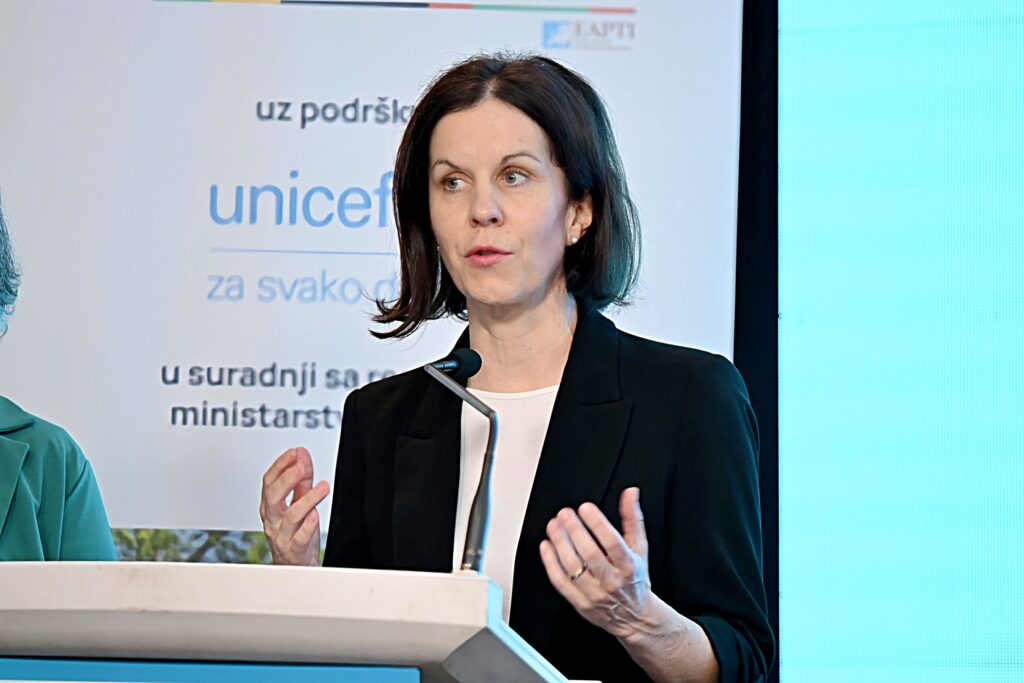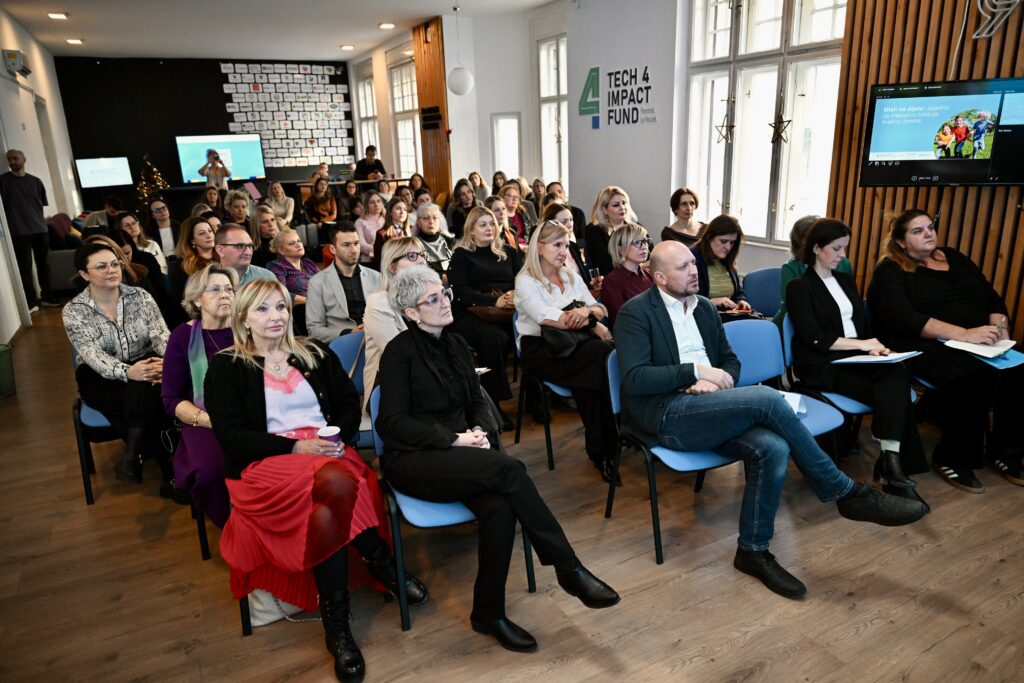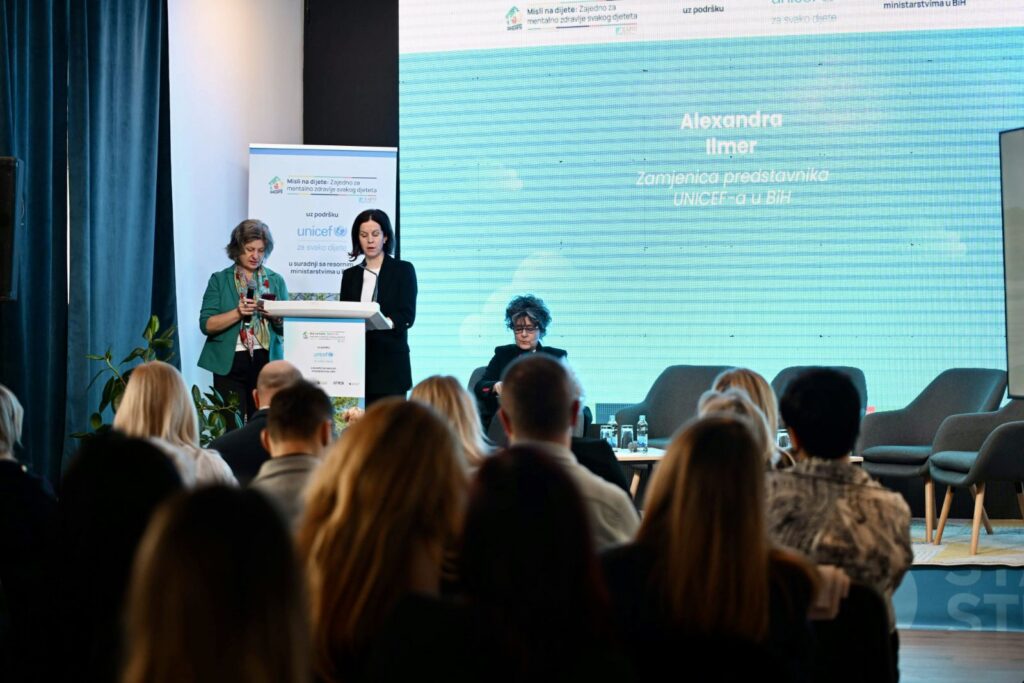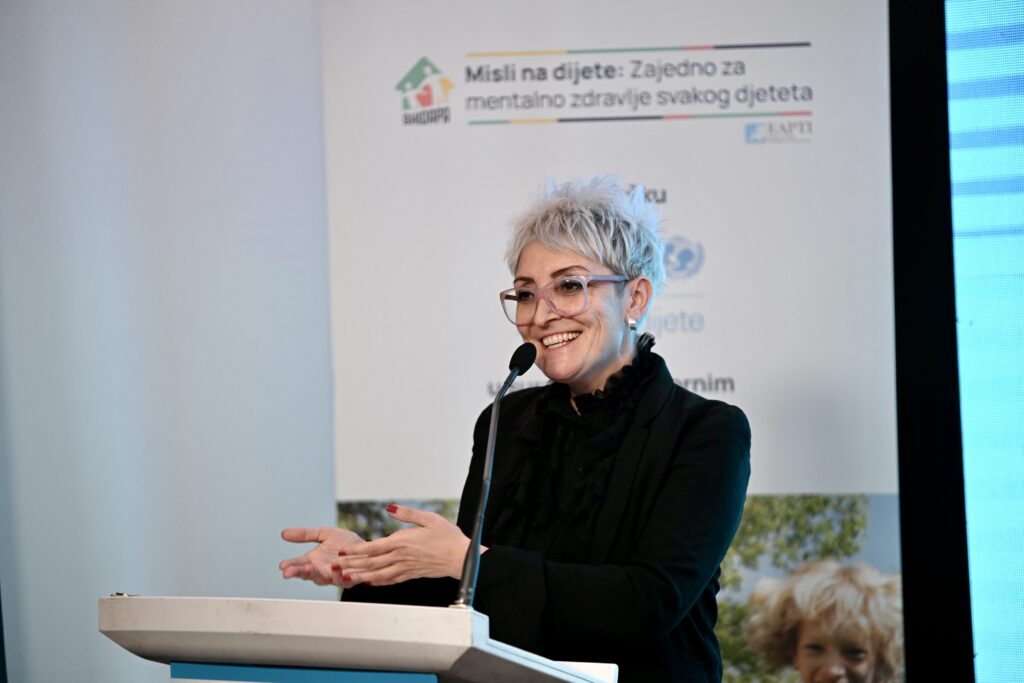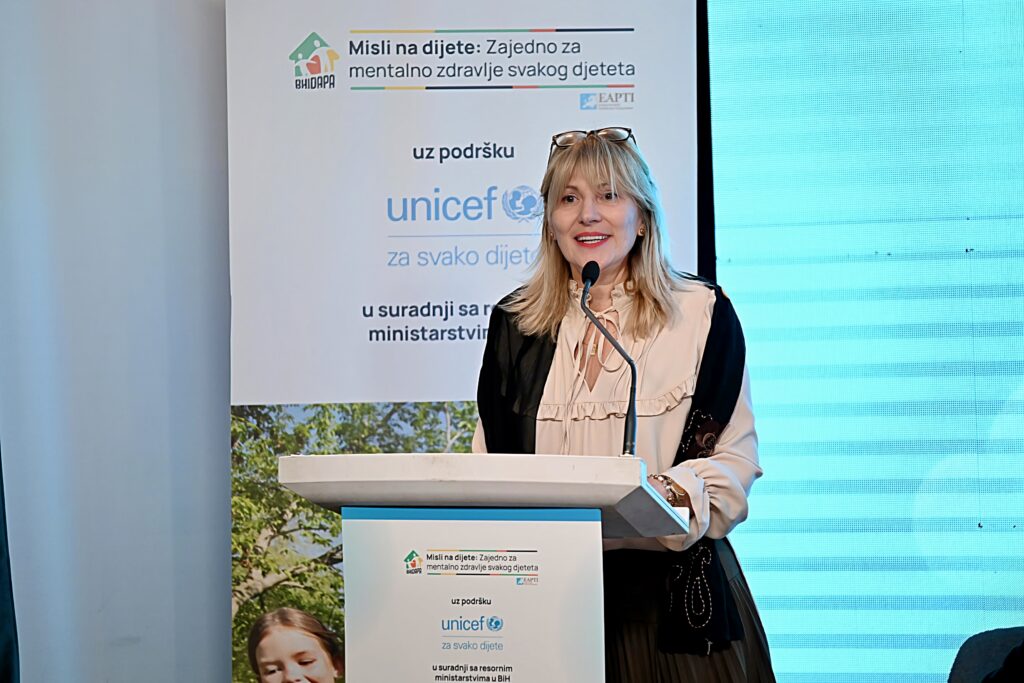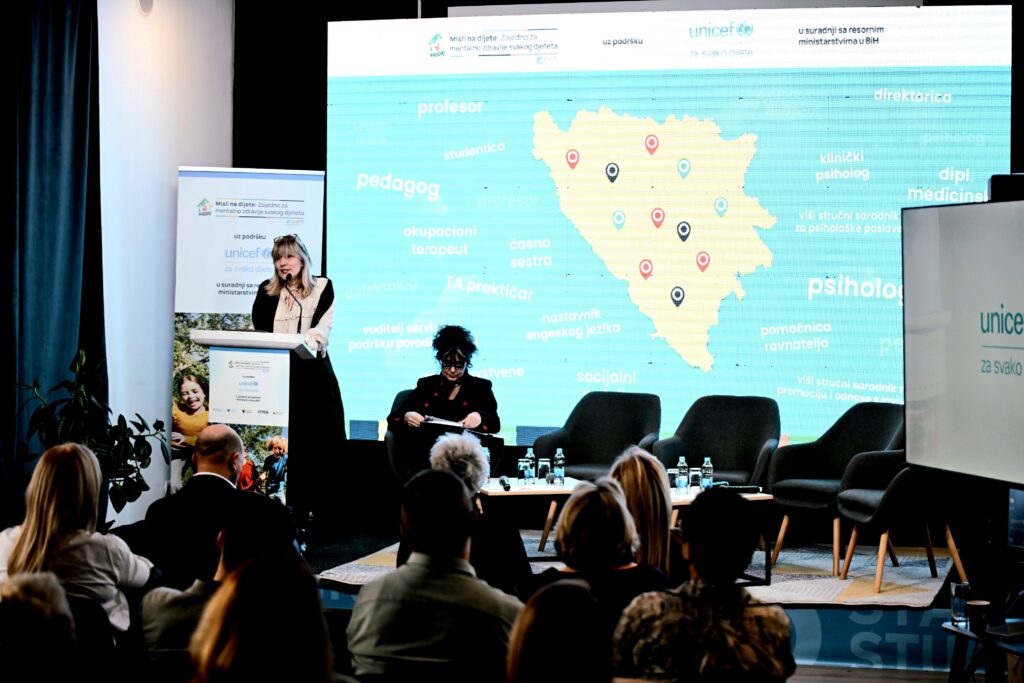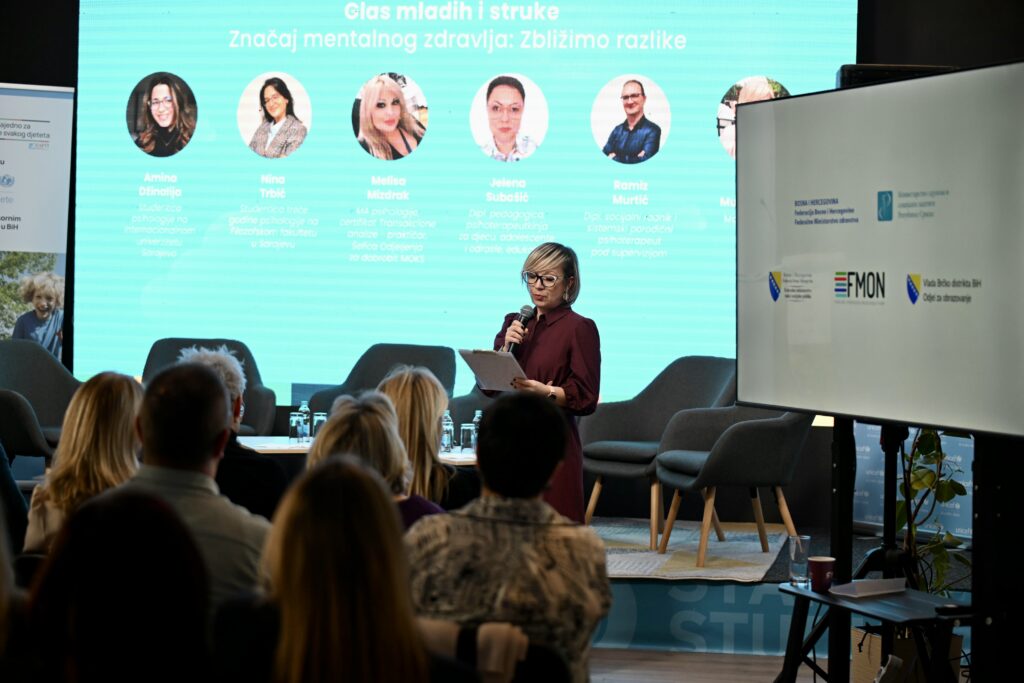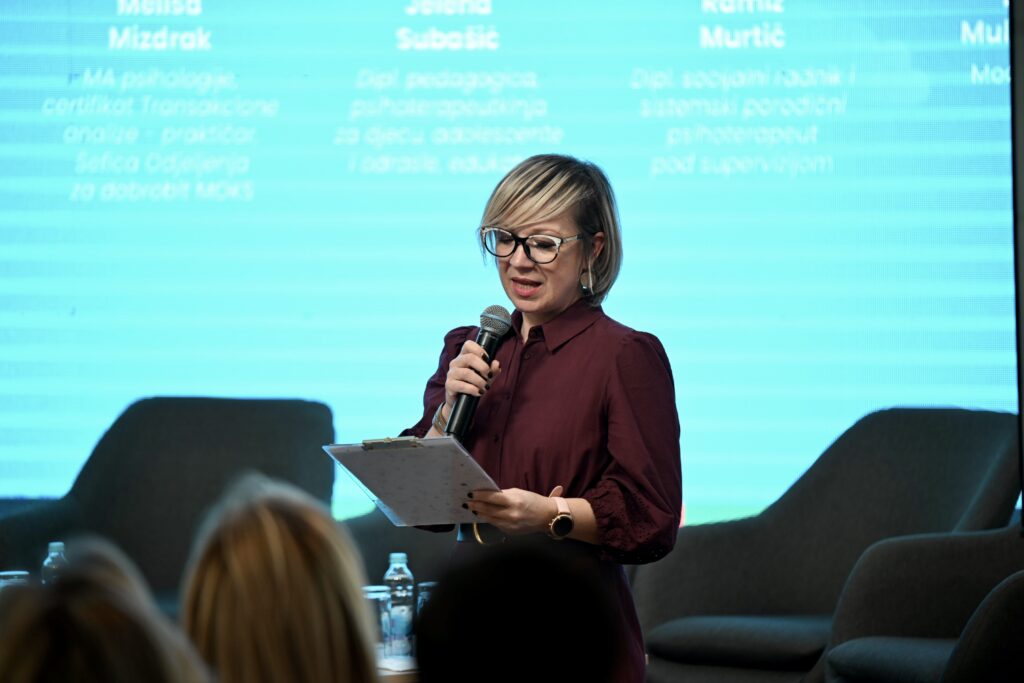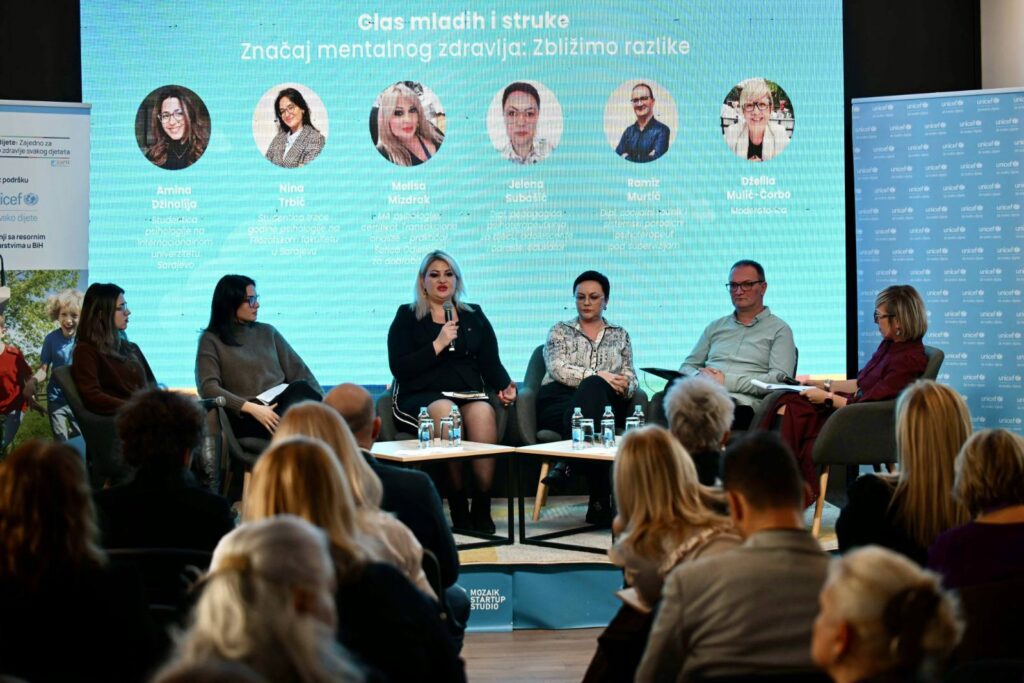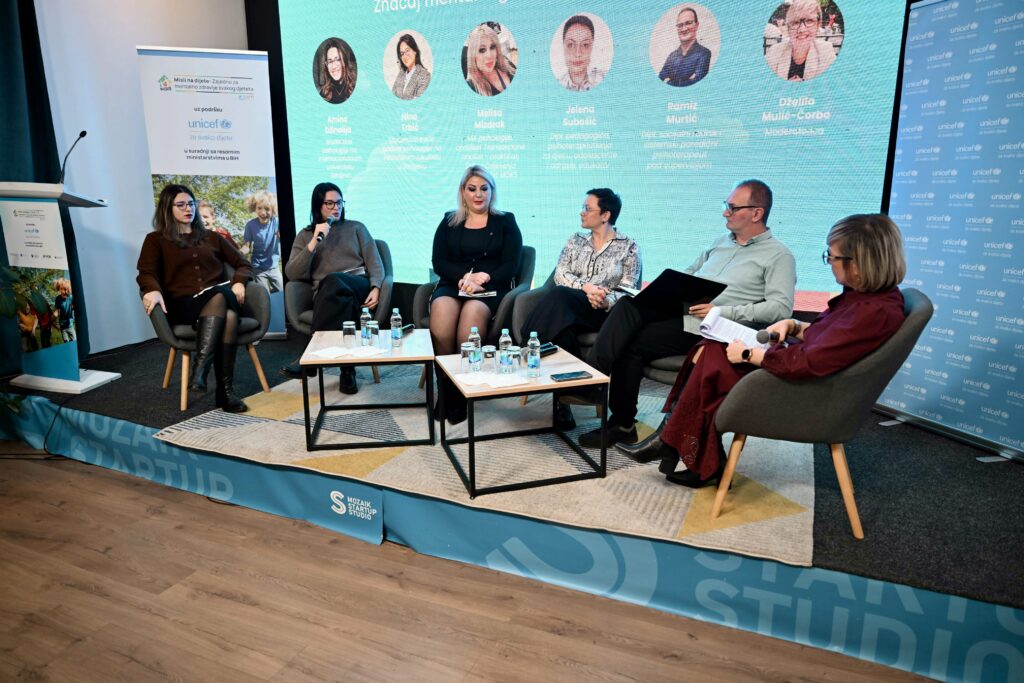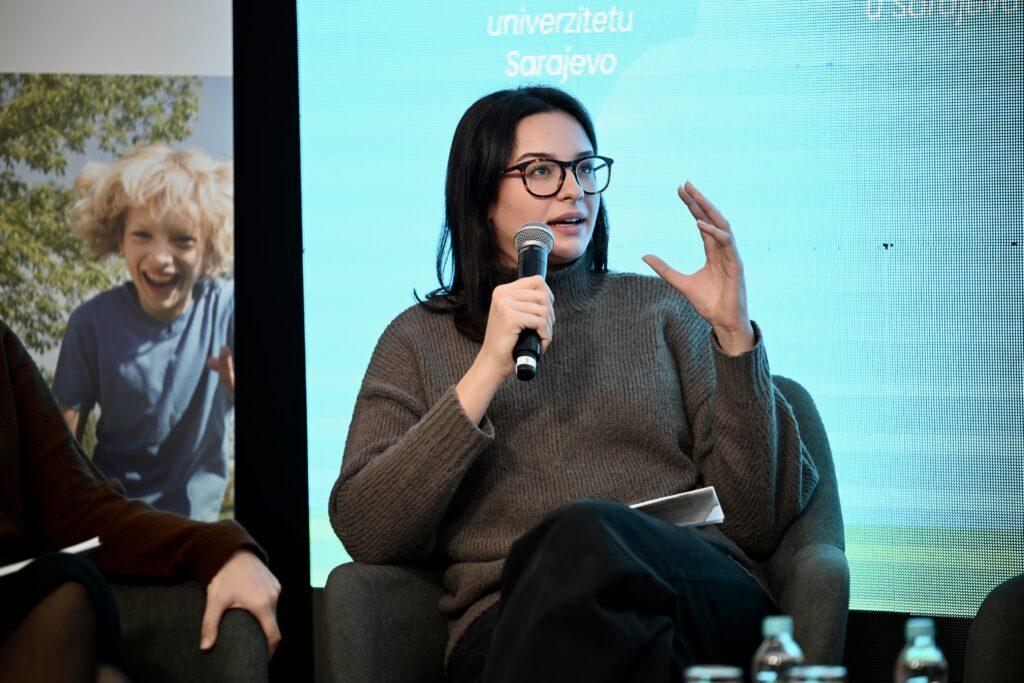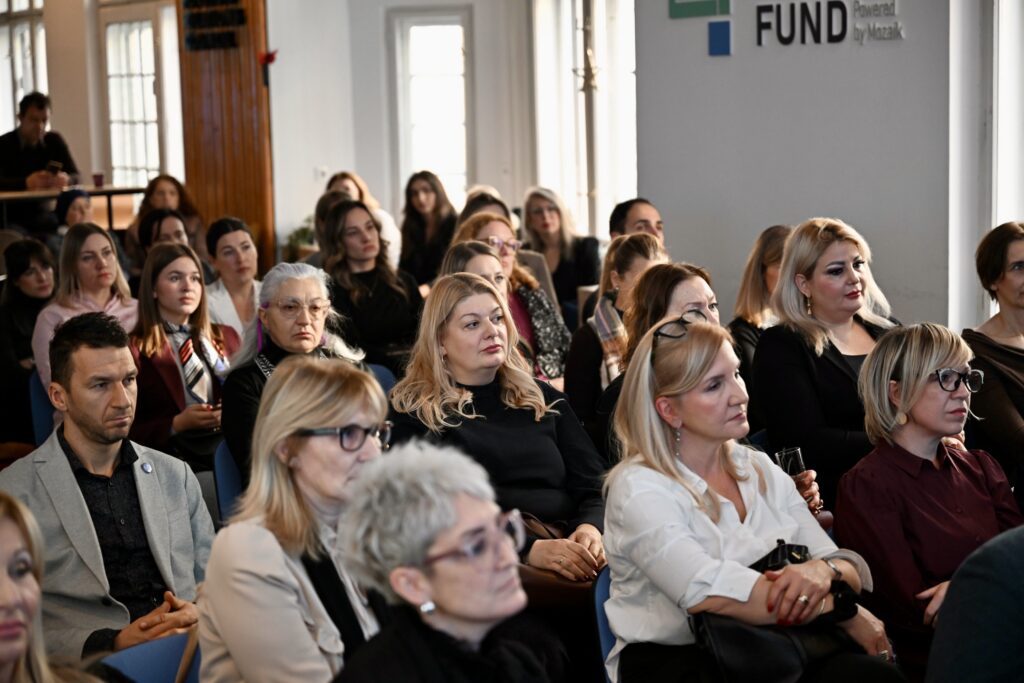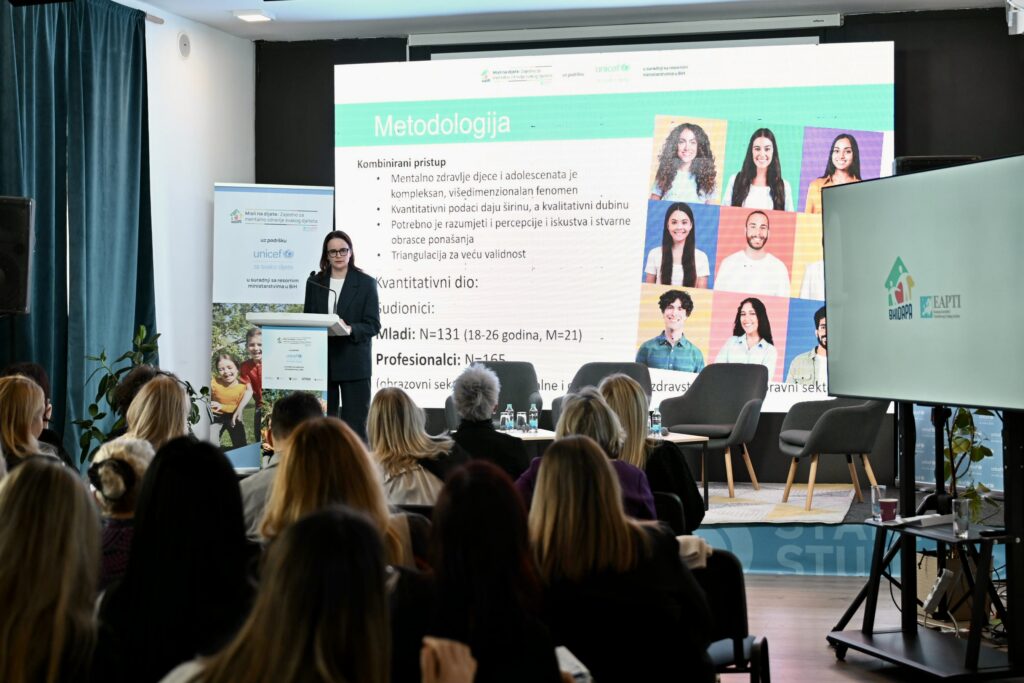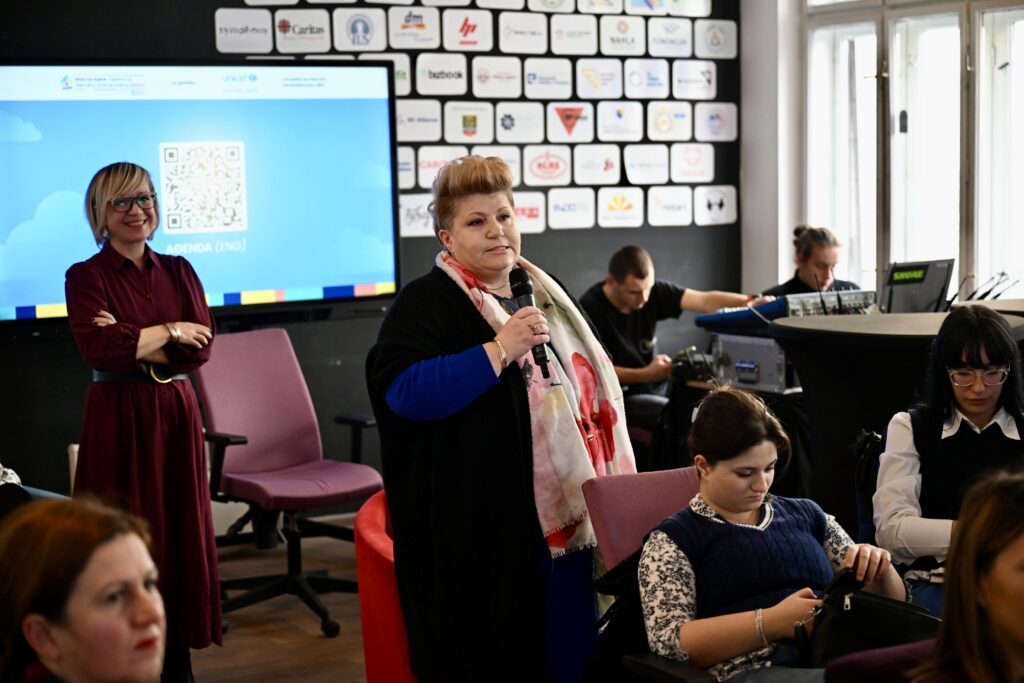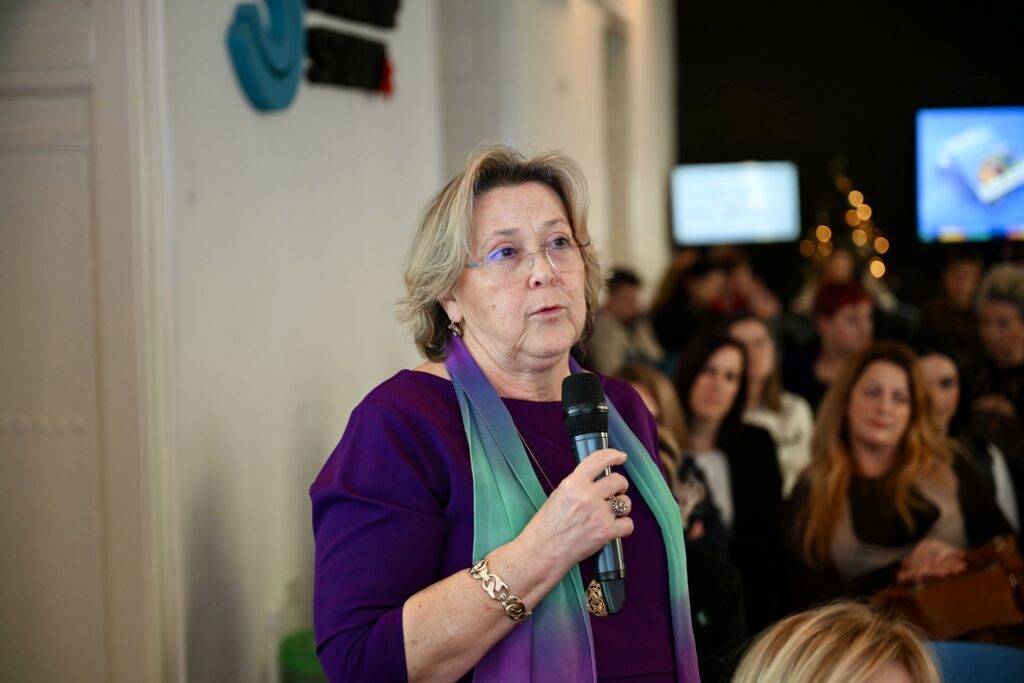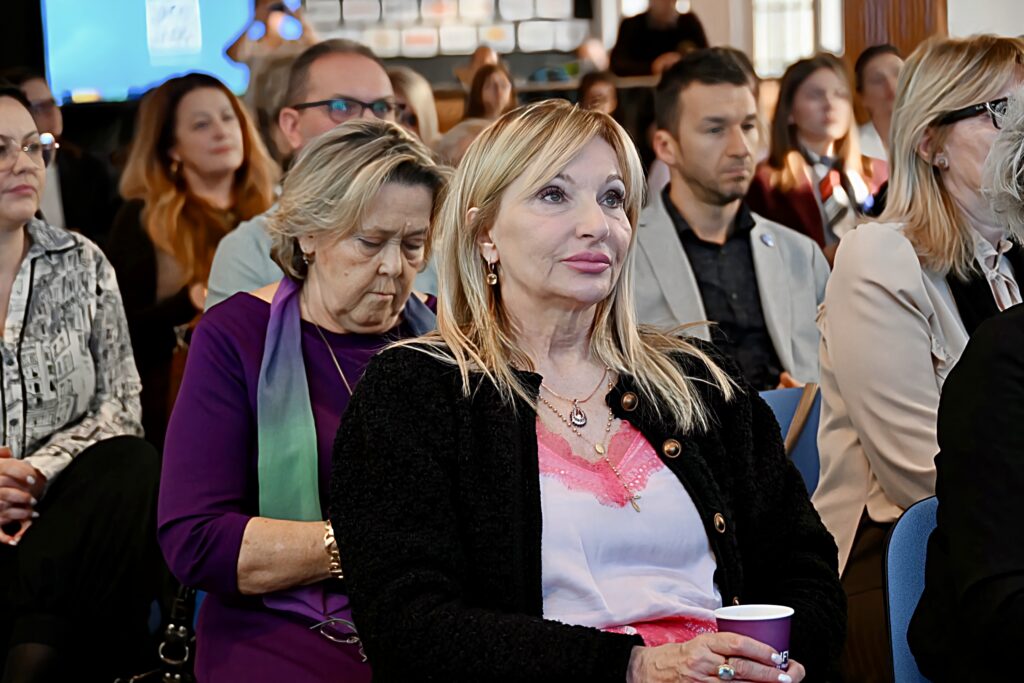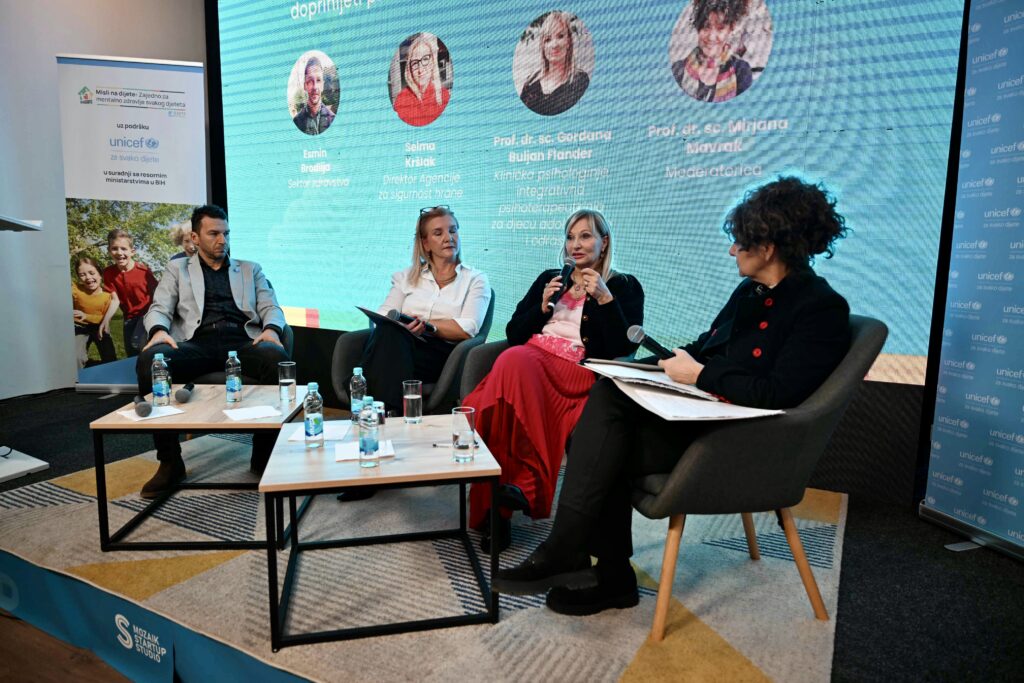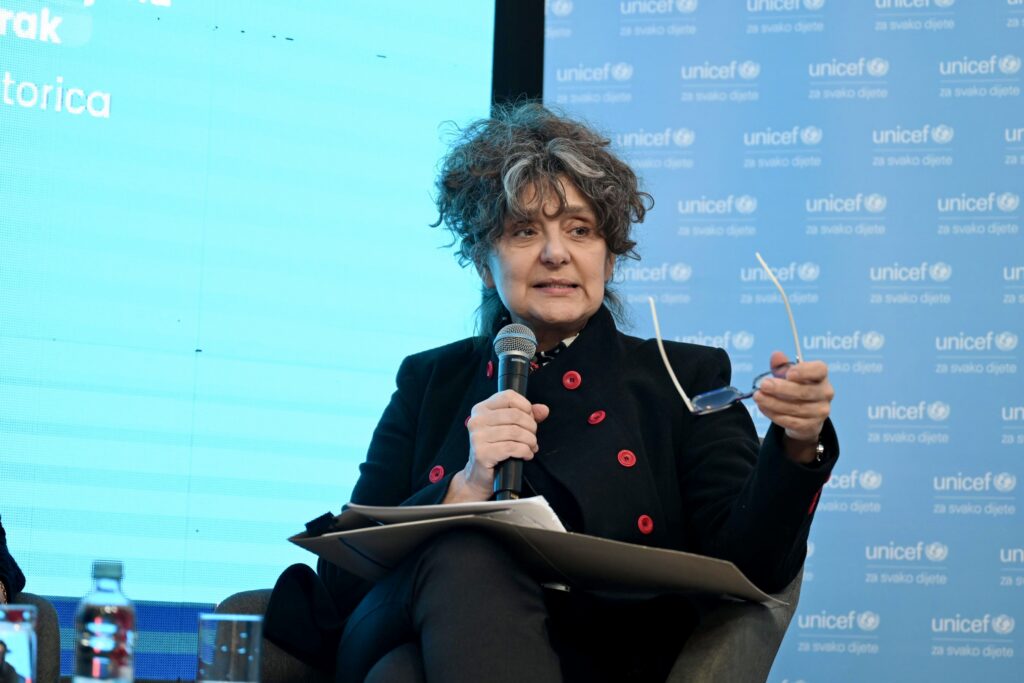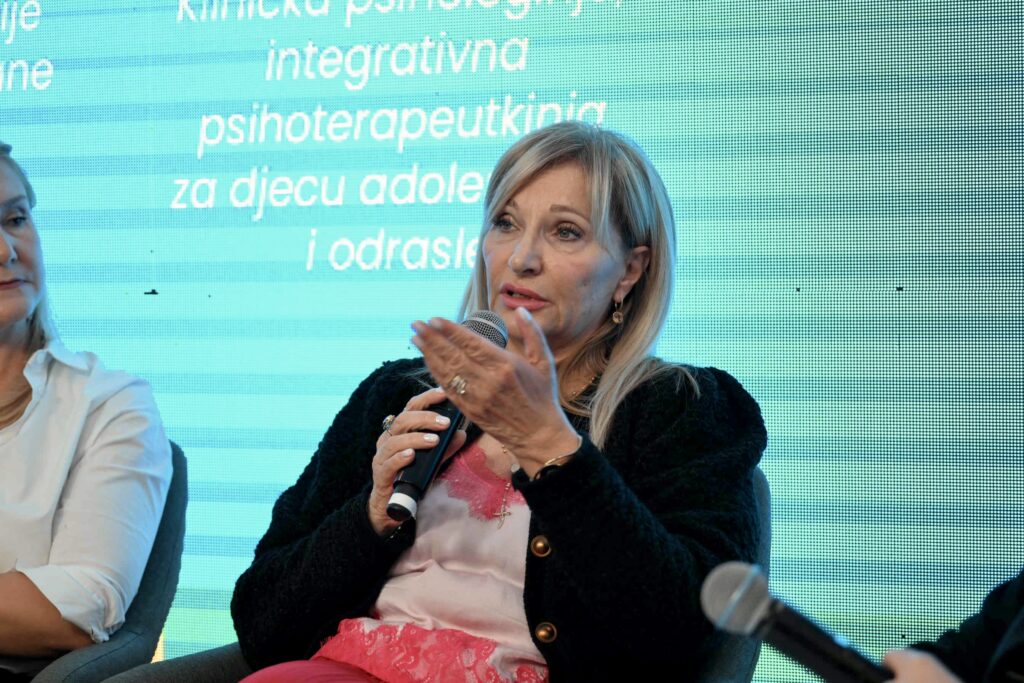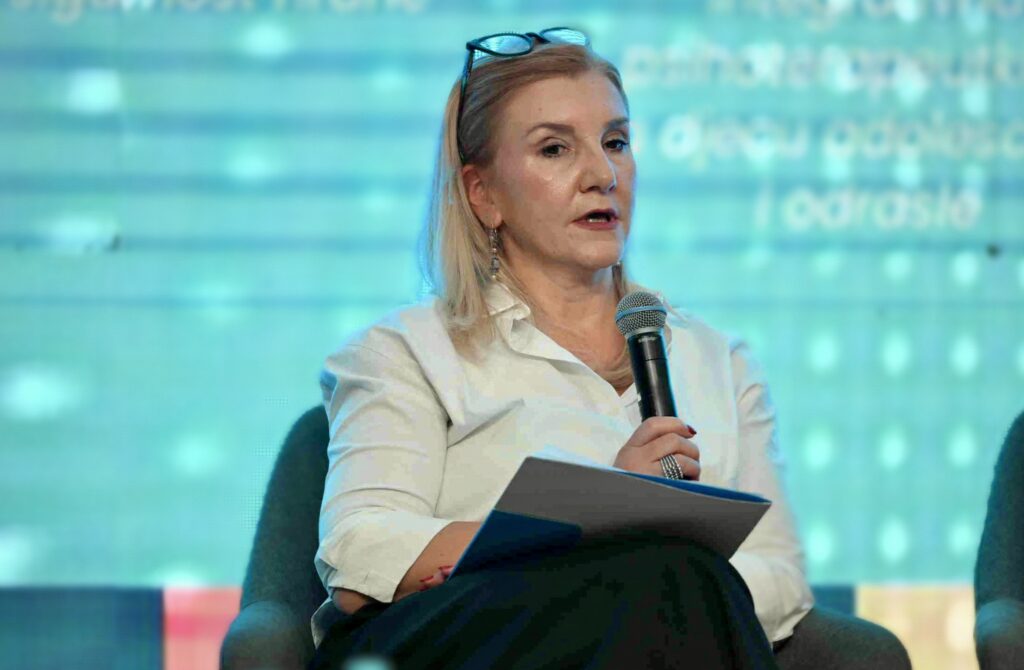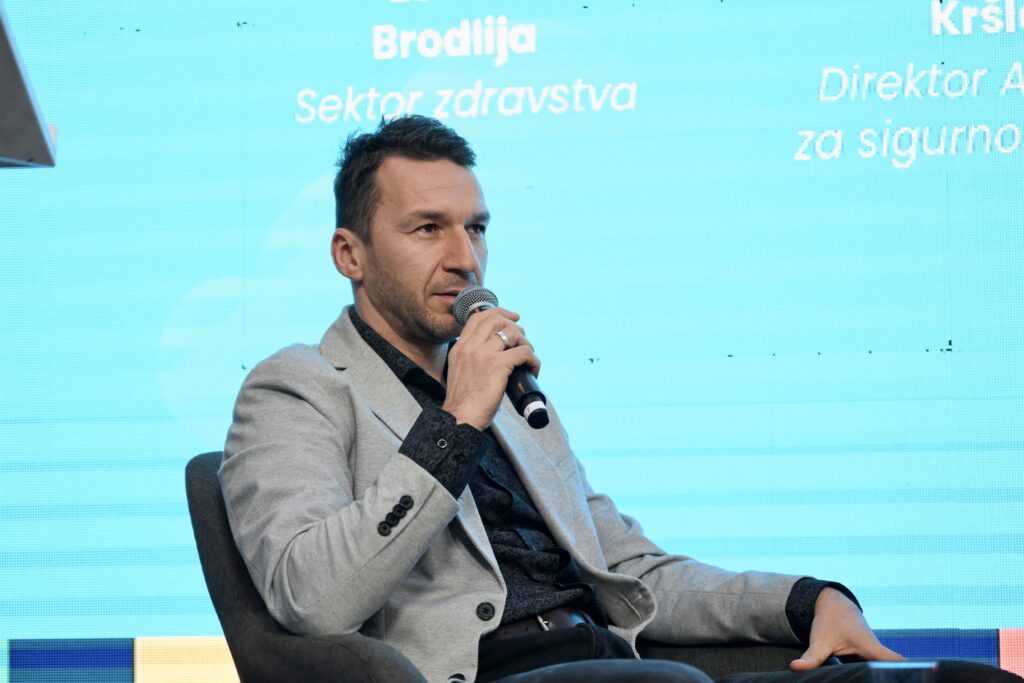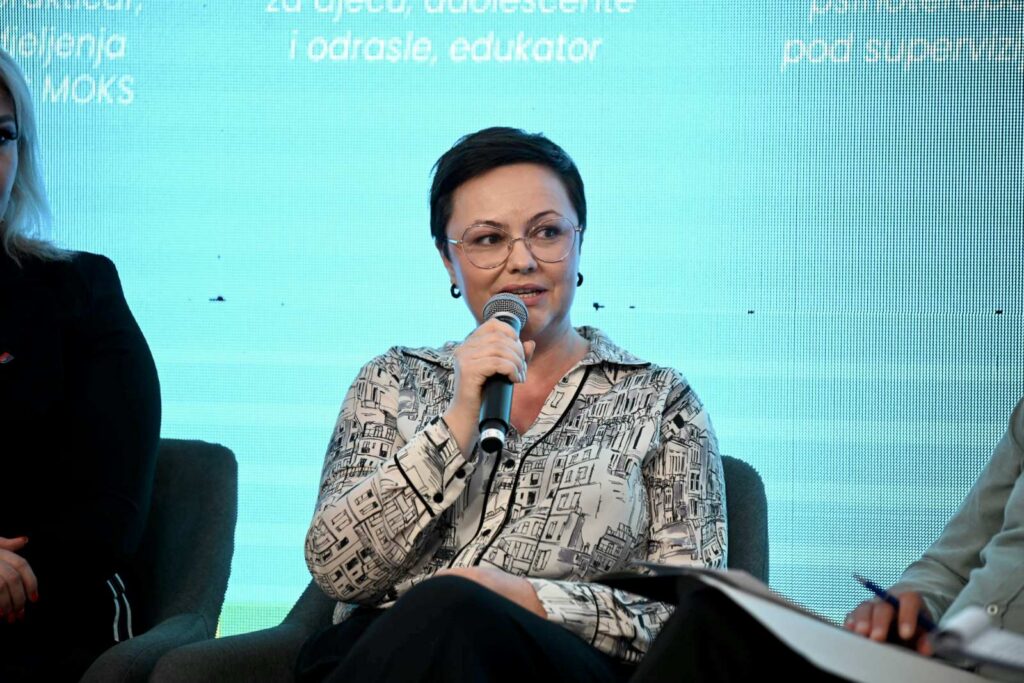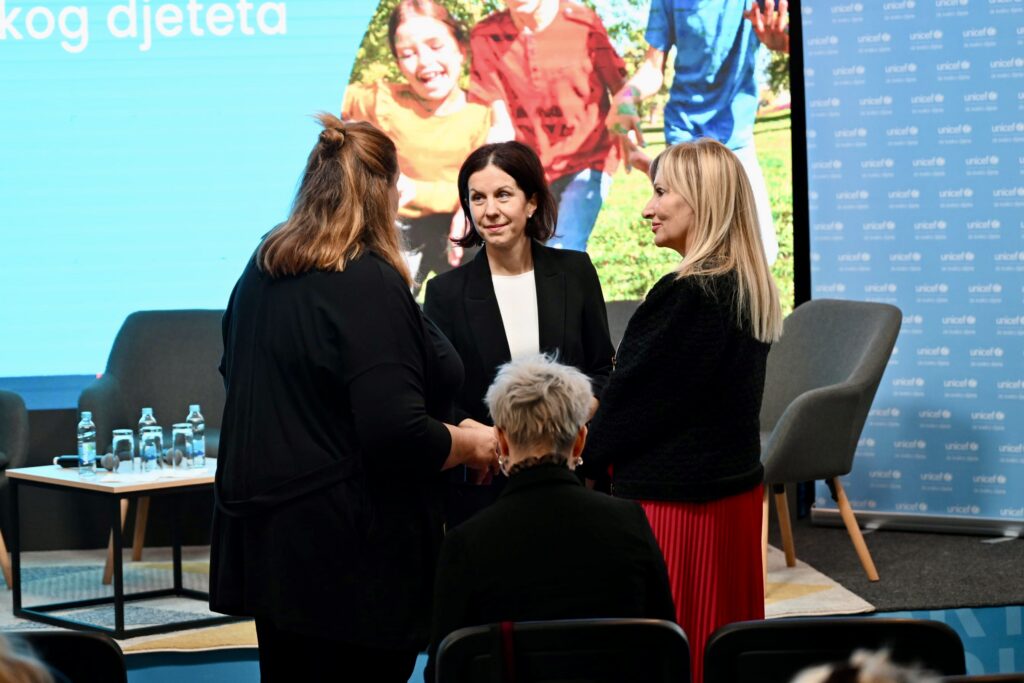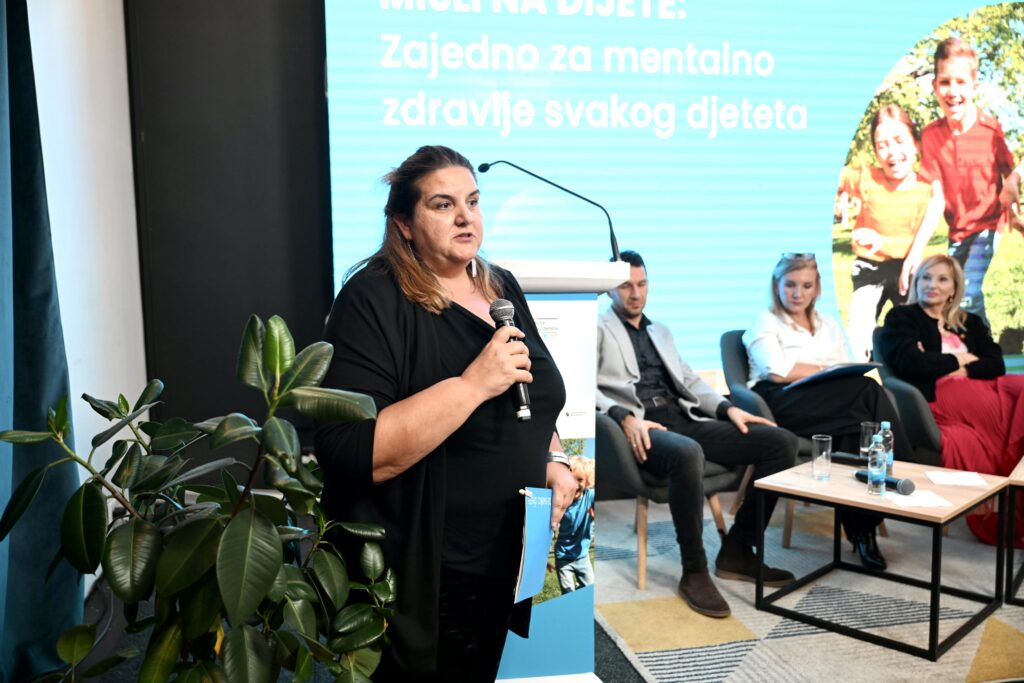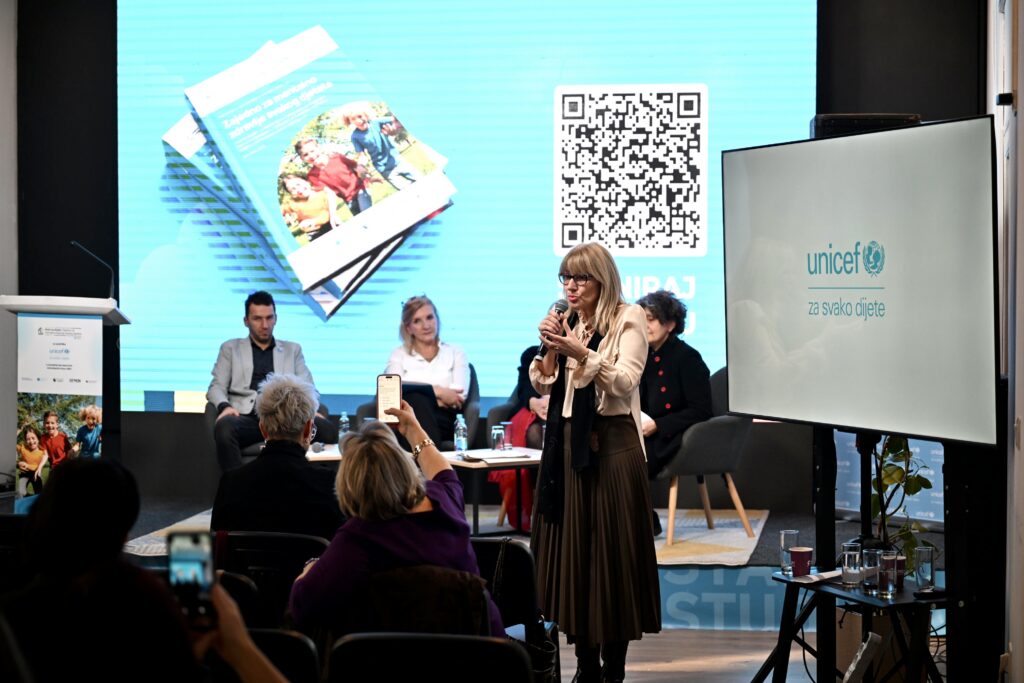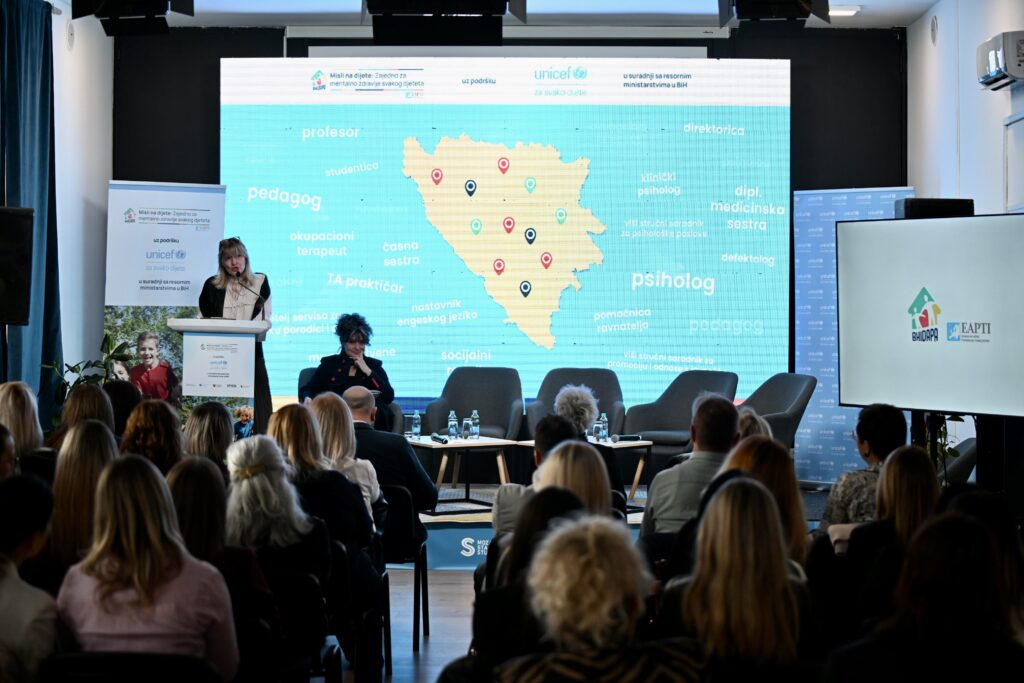


On 18 December 2025, in Sarajevo, at the Mozaik Startup Studio, BHIDAPA, together with its partners – UNICEF Bosnia and Herzegovina and the relevant ministries of health, education, labour and social welfare in Bosnia and Herzegovina – and with the financial support of the European Union and the Joint Swiss–UN Programme, organised the conference
“Mind the Child: Together for Every Child’s Mental Wellbeing”, within the framework of the project.
The conference brought together a targeted and diverse audience from across Bosnia and Herzegovina, including young people, mental health professionals, experts from the social protection and education sectors, and institutional representatives.
The event presented the findings of research on the status of mental health from the perspectives of both young people and professionals, and discussions were structured around two panel sessions focusing on:
- Solidarity and the importance of mutual listening to the voices of young people and professionals, and
- The practical value of the research findings and pressing challenges related to intersectoral and institutional cooperation.
Key Conclusions of the Conference
(summarised in ten points)
- In protecting the mental health of children and adolescents, all levels of support are important, with intersectoral cooperation and sustained collaboration over time being particularly critical.
- All barriers to cooperation share a common denominator: the need to connect fragmented support mechanisms into a coherent and integrated system.
- Training and supervision should not be understood as increased control, but as professional support that strengthens the quality of work with people.
- Every “blind spot” in communication indicates an opportunity for further action and system improvement.
- Crisis interventions have become part of everyday practice; the needs of children and adolescents are increasing, and some help-seeking behaviours may also be linked to secondary motivations (e.g. the perceived role of diagnostic status in relationships).
- Parents also require additional information and education in order to act as effective partners in supporting children’s mental health.
- Children’s and adolescents’ mental health must be a priority, with shared responsibility for the timely recognition of and response to behavioural and emotional difficulties.
- Financial support mechanisms should be more appropriately and equitably distributed between public and private services, as the pressure on all parts of the system is high and support is needed across sectors.
- Professionals are equal in rights but complementary in knowledge and responsibilities; both children/adolescents and adults/professionals need support in protecting their own mental health.
- If the 20th century was described as “the century of the child,” the 21st century is increasingly becoming the century of adults returning to self-care, in order to be better able to care for children.
The research findings and proposed measures for strengthening the system are available in the brochure (Latin script version).
The research findings and proposed measures for strengthening the system are available in the brochure (Cyrillic version).